Covenant Tracking in Private Credit: From Static Terms to Strategic Oversight
By: Quadrangle Team, Quadrangle
Published: 2026-03-27 · Read time: 7 min · Category: Technology
While covenants are designed to protect lenders, they are only as effective as a firm's ability to track, interpret, and act on them in real time.
Why Covenant Tracking Is Back in Focus
Private credit markets have grown rapidly over the past decade—but with that growth comes increased scrutiny. As deal structures become more bespoke and lender protections evolve, firms are facing a familiar but intensified challenge: ensuring covenant compliance across a fragmented portfolio of agreements.
While covenants are designed to protect lenders, they are only as effective as a firm's ability to track, interpret, and act on them in real time.
This builds on our prior discussions around Ensuring Covenant Compliance: An Automated Solution and Strengthening Oversight: Compliance in Credit Facilities and the Importance of Active Management—but shifts the focus from initial setup to ongoing operational oversight, where many firms encounter the greatest risk.
The Complexity of Covenant Tracking in Private Credit
Private credit agreements are inherently bespoke—and that flexibility, while valuable, introduces significant operational challenges.
Unlike standardized markets, firms must manage:
- Highly negotiated financial covenants
- Custom reporting requirements
- Tailored definitions (e.g., EBITDA adjustments)
- Event-driven triggers tied to performance or liquidity
Lack of Standardization
Each agreement defines covenants differently, making comparisons across borrowers difficult.
Limited Visibility
Key thresholds, definitions, and triggers are often buried within lengthy agreements, limiting real-time insight into exposure.
Missed or Delayed Triggers
Without automated monitoring, firms risk missing breach events, reporting deadlines, and early warning indicators.
Operational Disconnects
Legal teams negotiate covenant language, but operations teams track it. Without a structured handoff, critical context is often lost.
> The result is a process that is often reactive rather than proactive, increasing both operational risk and resource burden.
From Documentation to Data: A Better Approach
Effective covenant tracking requires moving beyond static documents to structured, actionable data. A modern approach should include:
Term Extraction and Structuring
Covenants should be broken down into discrete, trackable data points:
- Thresholds (e.g., debt ratio tests, minimum liquidity levels)
- Calculation methodologies
- Testing frequencies
- Cure rights
Centralized Repository
All covenant data should be stored in a single platform, enabling:
- Portfolio-wide visibility
- Consistent interpretation
- Easy access to underlying agreement language
Ongoing Monitoring and Alerts
Automated tracking ensures firms can:
- Identify upcoming reporting deadlines
- Flag potential breaches
- Monitor trends across borrowers
Benchmarking and Insight
Understanding how covenant terms compare across historical agreements can inform:
- New deal negotiations
- Risk management strategies
Bridging the Gap Between Onboarding and Ongoing Oversight
As highlighted in our onboarding guide, capturing key terms at the outset is critical—but it's only the first step. The real value comes from carrying that structured data forward into the lifecycle of the agreement.
This means:
- Terms identified during onboarding should flow directly into tracking systems
- Covenant logic should be preserved—not lost in summary
- Updates and amendments should be reflected dynamically
Why This Matters Now: Turning Covenants Into a Strategic Asset
In today's environment, private credit portfolios are facing:
- Increased borrower stress in certain sectors
- Greater focus on downside protection
- Heightened LP scrutiny around risk management
Firms relying on manual processes may find themselves reacting too late. In contrast, those with structured, automated approaches are positioned to act proactively—identifying risks earlier, responding faster, and negotiating from a position of strength.
> Covenants should not remain static clauses buried in agreements. When treated as living, structured data, they become a strategic asset—supporting better decision-making across legal, operations, and investment teams.
How Quadrangle Supports Covenant Tracking
Quadrangle's approach combines AI-technology, structured data, and legal expertise to transform covenant tracking into an automated strategic capability.
Key capabilities include:
- Term-by-term extraction of covenant descriptions and language
- Direct linkage to underlying agreement sections via "View" functionality
- Centralized term-by-term covenant tracking across borrowers and agreements
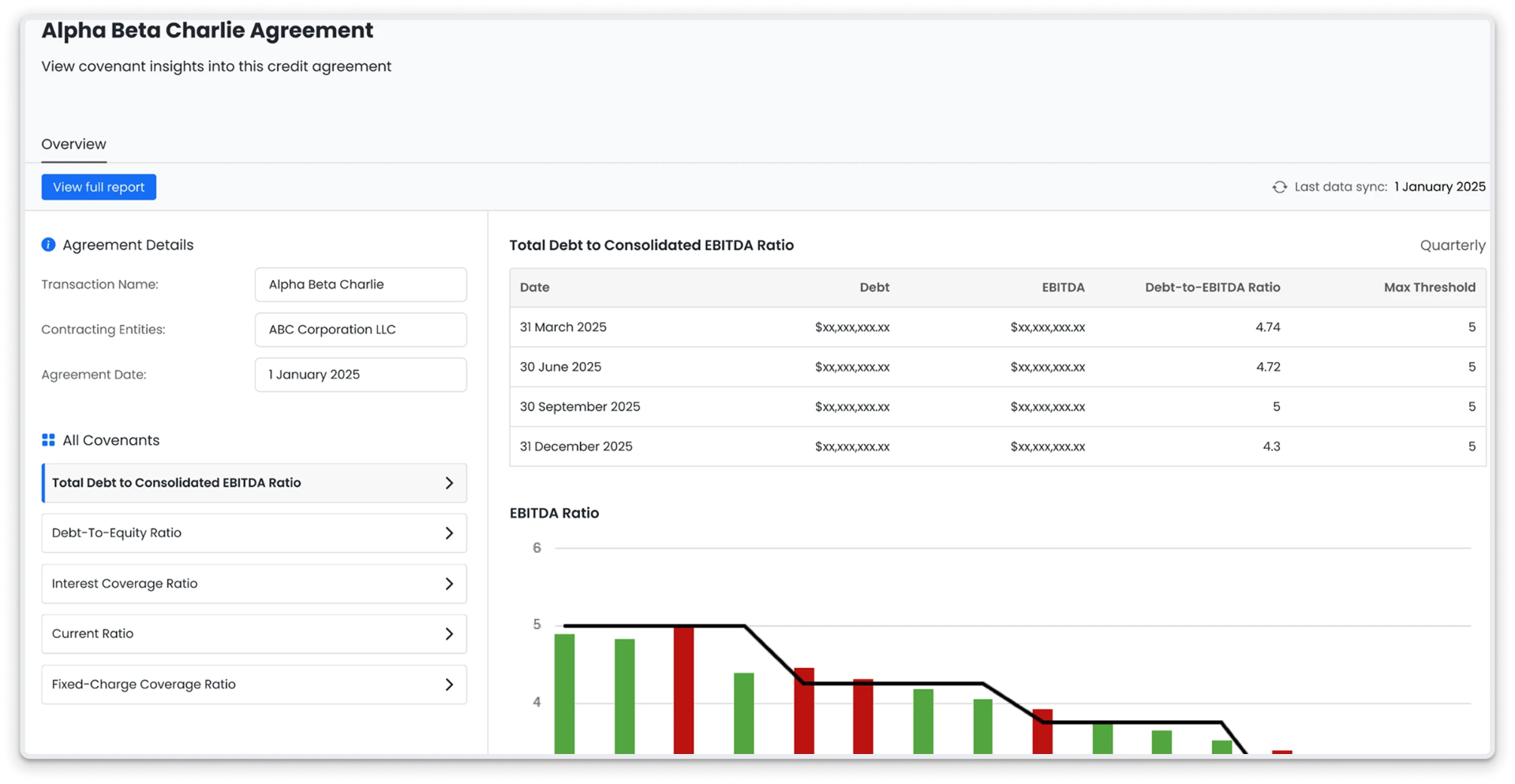
- Financial covenant tracking with real-time data analytics to view trends over time
- Automated alerts and reminders
- Benchmarking against historical data